

The Machine does not stay at work.
You close the laptop. You walk away from the meeting, the deadline, the imagined committee. You arrive home, in your kitchen, on a Saturday morning, with your own time in front of you.
The committee comes with you.
This is the part of domestication that goes unnoticed. The Machine is not a place. It is a way of seeing yourself, trained over years inside organisations, that does not switch off when you leave the building. It runs in the background while you cook. It runs while you talk to your partner. It runs while you sit down at the desk to work on the thing that is yours.
Especially then.
The personal project is where the Machine does some of its quietest work. The book you have been meaning to write. The course you keep planning to launch. The application you will not send. The idea that has been in the notebook for years. The thing you do alone, without a brief, without a deadline, without anyone else asking for it.
The Machine has views on all of it.
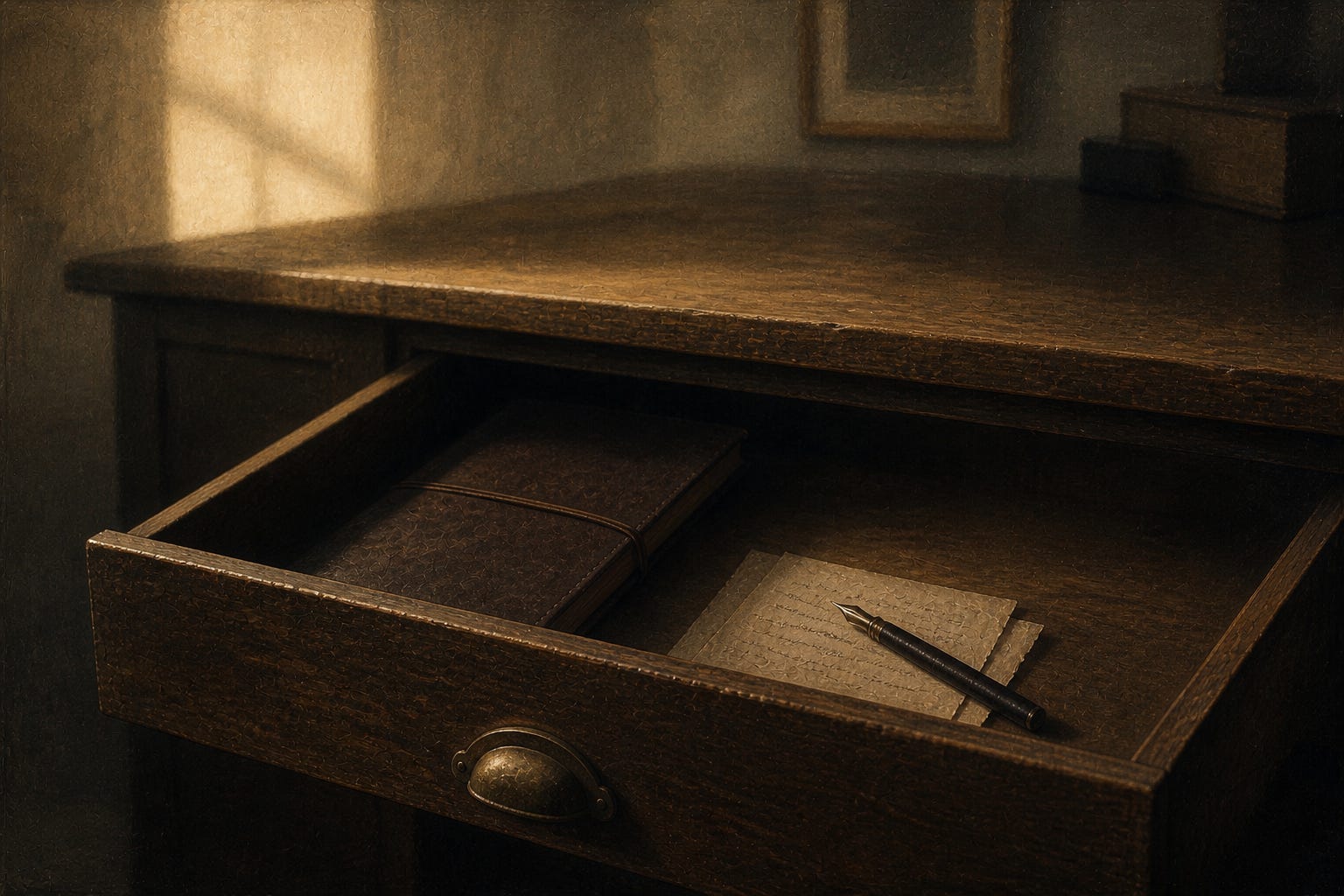
It tells you the work is not ready. It tells you the timing is wrong. It tells you to put it aside until the louder things are handled. It tells you to make the version that other people will recognise as legitimate. It tells you to wait until you have permission, which it never gives. It tells you, gently and reasonably, to keep it in the drawer.
The personal Machine is not loud. It does not need to be. It has all your trust.
This is where the Three Refusals live in real time, on your own time, in your own work.
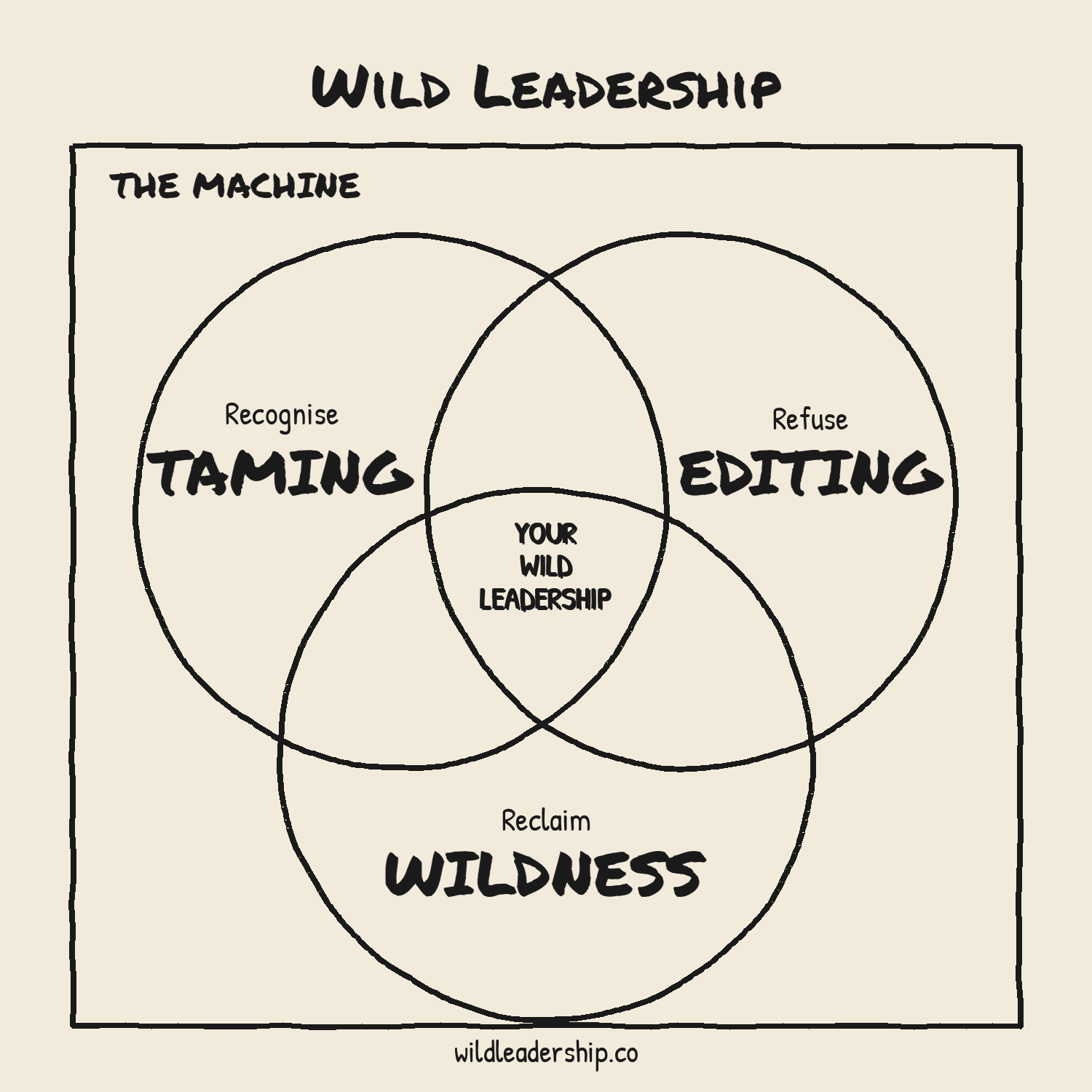
Recognise the taming. Notice that the committee is at work on the personal project too. Hear the voice that says it is not the right moment. See the moment it asks for one more conversation, one more draft, one more wait. As long as you cannot see the committee shaping your own work, the work stays shaped. The seeing is the doorway. Without it, the rest does not begin.
Refuse the editing. Catch the soft sentence in the moment. Leave the sharp version standing. The edits a personal project absorbs are the ones nobody else will ever notice. There is no chair to placate. There is no peer in the next office. There is only you, alone with the work, choosing whether to round its edges before the world ever sees it. Most edits at this stage happen silently. The discipline is to start hearing them.
Reclaim wildness. Put the work into the world. Not when it is finished. Not when the moment is right. Not when the audience is ready. Now, in the form it is in. The half life is the version where the personal project lives forever in the drawer, perfectly preserved, never tested. The Machine prefers it that way. A project that never leaves the drawer cannot disappoint. It also cannot do anything.
The three operate together. Recognise alone is private grief. Refuse alone is rebellion in a room with no one in it. Reclaim alone is delusion. The work lives where they overlap. And only there.
The Machine you cannot see is the one shaping the work you thought was yours.
This piece has been through that pass. So has the one before it. So will the next.
The committee was at the desk this morning. It will be back tomorrow.
You already know which of the three you are avoiding.
You have known for some time.
The work starts there.